
Compare Skilled Residence Pathways
There are different pathways that can lead to a New Zealand skilled residence visa.
Each pathway has its own set of requirements that you must meet.
Use the table below to quickly narrow down which skilled residence pathways may be worth exploring.
You can view an overview via this YouTube link:
https://www.youtube.com/watch?v=_PZSs2QVe1o
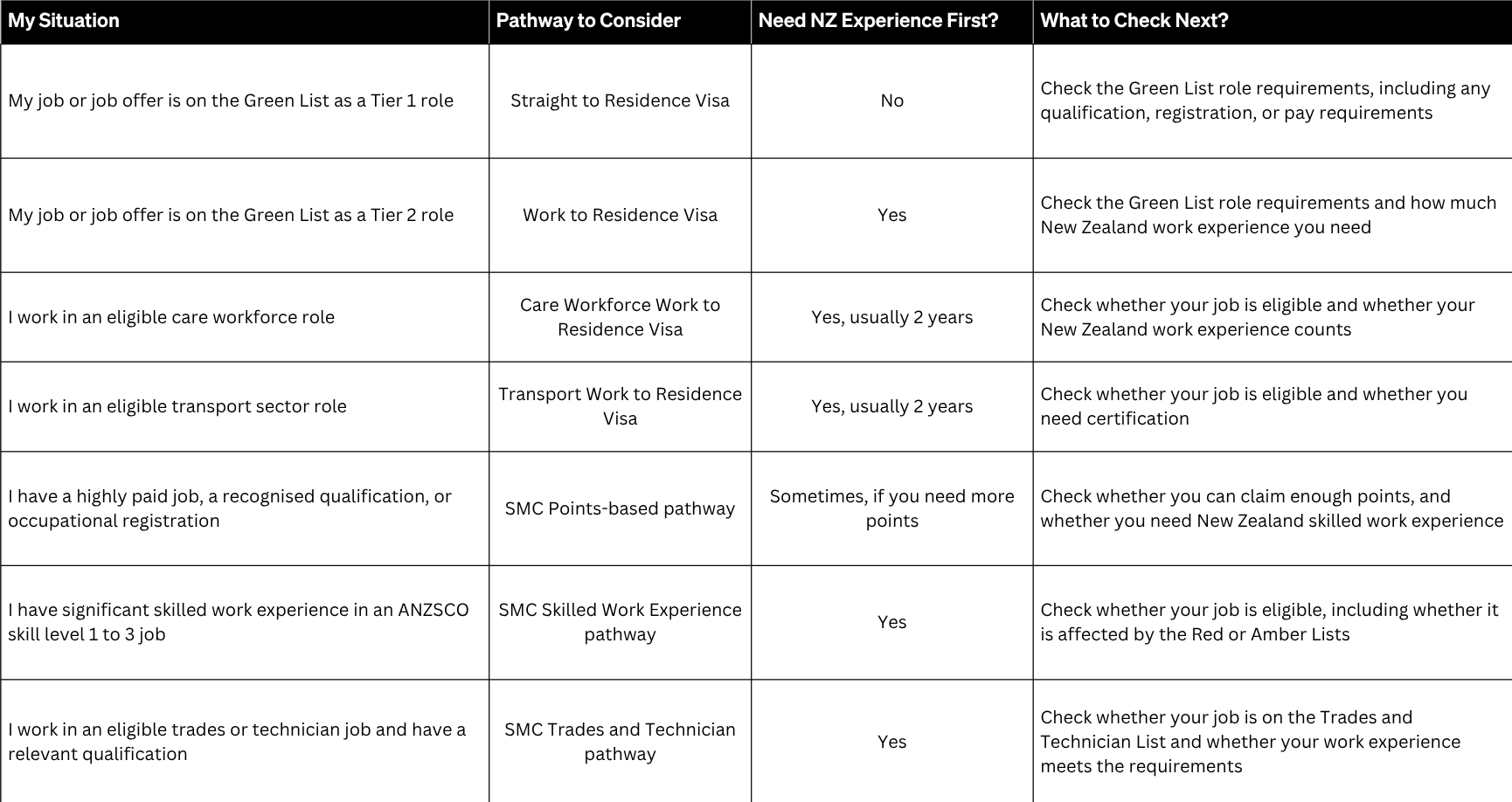
The Skilled Migrant Category (SMC) and the Work to Residence (WtR) visas are two completely different pathways used by Immigration New Zealand (INZ) to grant residency.
SMC is a broad framework based on professional skill tiers, qualifications, or experience.
WtR is a specific path reserved for occupations on Tier 2 of the Green List or specific sector agreements.
The recent 24th August 2026 instruction changes introduced two new SMC Pathways and updated changes to the WTR wage rate requirements.
If your NZ Residency pathway requires skilled work experience in New Zealand.
If you are applying under an SMC pathway that requires skilled work experience in New Zealand, you must meet the SMC wage threshold in place when you started gaining this work experience. If your pay did not meet the SMC wage threshold when you started working in New Zealand, you can begin gaining skilled work experience later (for example, if you receive a pay rise or change jobs). Your skilled work experience starts counting when your pay meets the SMC wage threshold in place at that time. You cannot use an earlier SMC wage threshold (that was in place when you started work in New Zealand) and start meeting it later.
Timeframe for setting your SMC wage threshold
There is a limit on how far back you can go when setting your SMC wage threshold.
The skilled work experience used to set your threshold must be within the eligible timeframe for your pathway.
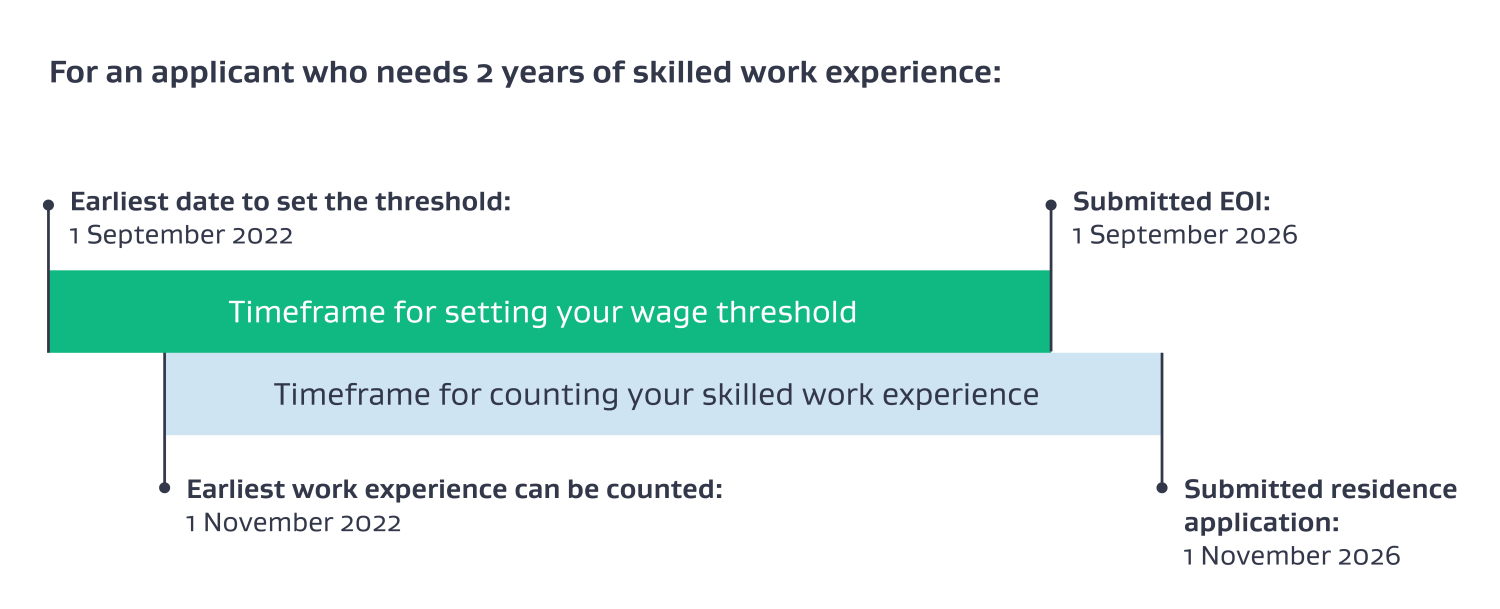
This timeframe is twice the amount of skilled work experience you need, counted back from the date you submit your EOI.
For example, if you need 2 years of skilled work experience and you submit your EOI on 1 September 2026, the earliest you can set your threshold is 1 September 2022
(4 years before you submit your EOI).
Timeframe for counting skilled work experience
The timeframe used to set your wage threshold is different from the timeframe used to count your skilled work experience. When setting your wage threshold, the eligible timeframe is counted back from the date you submit your EOI.
However, the eligible timeframe for counting skilled work experience is counted back from the date you apply for residence. This means you can continue gaining skilled work experience after submitting your EOI and before applying for residence.
Grace period
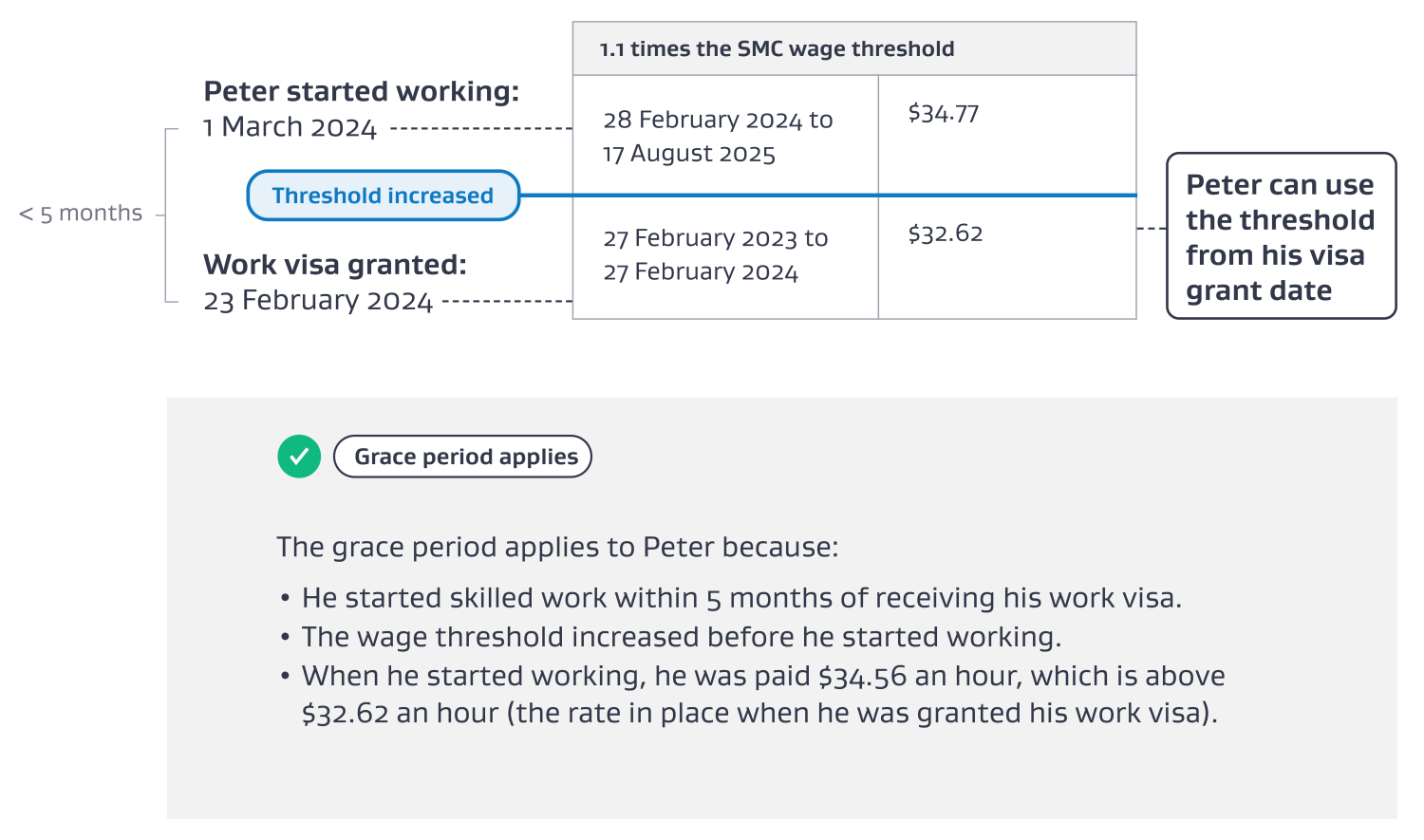
In some cases, the SMC wage threshold may have increased between the date you received your work visa and the date you started gaining your skilled work experience. In these instances, there is a grace period that may allow you to meet the lower threshold that was in place when you received your work visa.
When it applies
The grace period applies if:
- you started gaining your skilled work experience within 5 months of your work visa being granted
- the SMC wage threshold increased between the date your work visa was granted and the date you started your skilled work experience
- your skilled work experience was within the eligible timeframe, and
- when you started your skilled work experience, you were paid at least the SMC wage threshold that was in place when your work visa was granted.
The grace period does not apply to a variation of conditions or an AEWV Job Change.
Example
Peter is applying under the Skilled Work Experience pathway. His job is not on the Amber List, so he must be paid 1.1 times the SMC wage threshold.
He was granted his work visa on 23 February 2024. The threshold at this time was NZD $32.62 an hour.
Peter began working on 1 May 2024 and was paid NZD $34.56 an hour. The threshold at this time had increased to NZD $34.77 an hour.
Because Peter started working within 5 months of receiving his work visa, he only needs to meet the rate that was in place when his work visa was granted: NZD $32.62 an hour.
If you require an obligation free consultation, please contact me directly to discuss your case.